Copyright Rijana
The hormonal system of a queen
The queen is by nature a seasonally poly-
However, due to domestication queens can be cyclic all year round. You can influence this by amount of light and increasing day length.
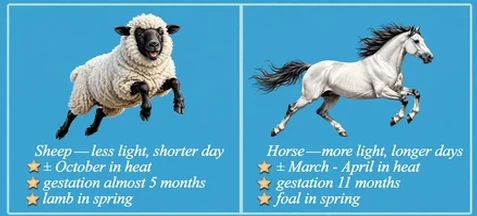
Mother nature has for virtually all animal species an optimal time to raise the young e.g.:
A queen, by nature, is thus in heat in spring.
This also explains why the first heat can take place at such a variable age
4 -
This is partly dependent on a certain weight (± 2.5 kg).
The ovulation of the queen during the
heat occurs through external stimuli such as mating.
The queen is a so-
>External changes to the external genitalia are rarely seen.
The heat behaviour is however very clear. Through a mating the queen
will 1-
The number of matings does influence the amount of ovulation.
After 1 mating about half of the queens ovulate, after multiple matings almost 100%. Queens that do not or poorly come into heat we can try to get on the
right track by hormone administration by injection or by stimulation of the vagina e.g. with a cotton swab.
Pseudopregnancy does occur in the queen but mostly without clear external characteristics.
A so-
So a nursing queen can certainly be fertilely mated!! Although it is generally planned matings, a slip can occur. In contrast to the dog, we cannot do much
with certainty with the unwanted mated queen. (Of course sterilization after the accident not included here).
The most certain therapy up to now is 40 hours after the mating to have the queen given a hormone injection.
These are however interventions that should only be applied in case of emergency because the chance of a uterine infection or, despite the shot, still getting a
litter of kittens is certainly present.
D. Bouwman (Veterinary Practice Landsmeer)